

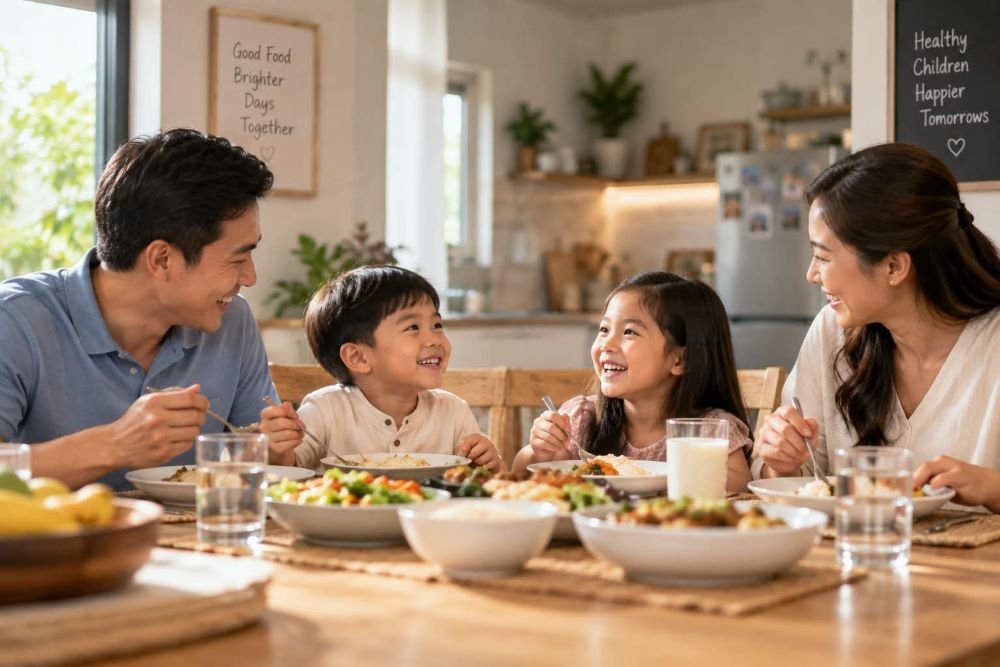
Between school drop-offs, deadlines, errands, and screen time, finding a moment when the whole family can simply sit down together can feel increasingly rare. But sometimes, one of the most meaningful things parents can do for their children happens around something as ordinary as the dining table.
This is the spirit behind Kainang Pamilya Mahalaga Day, a national observance held every last Monday of September that emphasizes the importance of families sharing meals together. It reinforces the Filipino tradition of mealtime as a valuable opportunity for connection and communication, a reminder that sharing a meal goes beyond physical nourishment. It is also a chance to reconnect, communicate, and create everyday moments of learning.
A 2023 systematic review of 14 articles found that more frequent family meals were associated with better diet quality and were linked to positive outcomes across children’s health, well-being, behavior, and academic life. The review also found that frequent family meals may help protect children and adolescents against poorer diets, obesity, risk behaviors, poorer mental health and well-being, and poorer academic outcomes.
While a shared meal is only one part of a child’s overall environment, the findings highlight how meaningful the simple act of eating together can be.
Of course, a family dinner does not have to be perfectly prepared or happen every single day. Sometimes, it is simply the conversation that counts.
The Family Table as a Learning Space
Mealtimes can be a place to share stories about their day, listen to others, and learn how to participate in conversations. These seemingly small interactions can help nurture communication and social skills while giving children a reassuring sense of routine and belonging.
The table can also be where children begin learning about food itself.
Parents can turn everyday questions into moments of discovery by teaching kids where vegetables come from, what ingredients of their food are, and how their meals are made.
Encouraging children to be curious about what they eat can help them develop a more mindful relationship with food and nutrition. It also gives parents an opportunity to model the habits and choices they hope their children will carry with them as they grow.
Even a familiar glass of milk can become part of that conversation.
Children can learn about the journey food takes before reaching their homes, from the farm and the ingredients used, to the processes involved in producing the products families consume.
Making More Informed Choices
Understanding ingredients and where products come from can help families make more informed choices. This is also where traceability becomes meaningful, not just as a technical process, but as a way of giving parents greater visibility into the journey behind the food they bring home.
For FEIHE, that journey begins with its approach to dairy production and traceability, from milk sourcing through production. Its Fresh Milk Formula starts with fresh milk as the first ingredient, giving parents another point of reference when looking more closely at what goes into the milk formula they choose for their children.
Ultimately, the value of a family meal is not measured by how elaborate the food is or how perfectly everyone behaves at the table.
It is in the everyday moments: a child sharing a story, a parent asking a question, a family laughing together, or a simple conversation about where their food comes from.


